Mining productivity rarely begins with a bigger machine. It begins with a better match between equipment, geology, haul roads, and production targets. This is why mine operators must ask: how does equipment selection affect mining efficiency?
Howard L. Hartman, a respected mining engineer and editor of the SME Mining Engineering Handbook, stated, “Equipment selection is one of the most important decisions in mine planning.” His observation remains practical today. A 220-ton haul truck may appear powerful, yet it can lose time on narrow benches, steep ramps, or poorly maintained roads. A smaller fleet may deliver better cycle times and lower fuel consumption.
The details matter. Bucket size must suit blasted rock conditions. Engine power must match gradient and payload. Tire durability matters on sharp, wet surfaces. Operators also need reliable access to parts, technicians, and digital monitoring systems. Downtime is expensive.
Still, efficiency is not only a spreadsheet result. Real mines face changing ore hardness, weather delays, operator learning curves, and imperfect maintenance records. That uncertainty deserves attention. A theoretically optimal machine can underperform in a dusty pit with weak service support.
This 2026 guide examines practical equipment choices, including excavators, loaders, haul trucks, crushers, and autonomous systems. It connects productivity with safety, fuel use, maintenance, and environmental performance. The goal is not to promote the largest fleet. It is to help decision-makers choose equipment that works consistently under real mining conditions.
Mining Equipment in 2026: Types, Roles, and Core Technologies
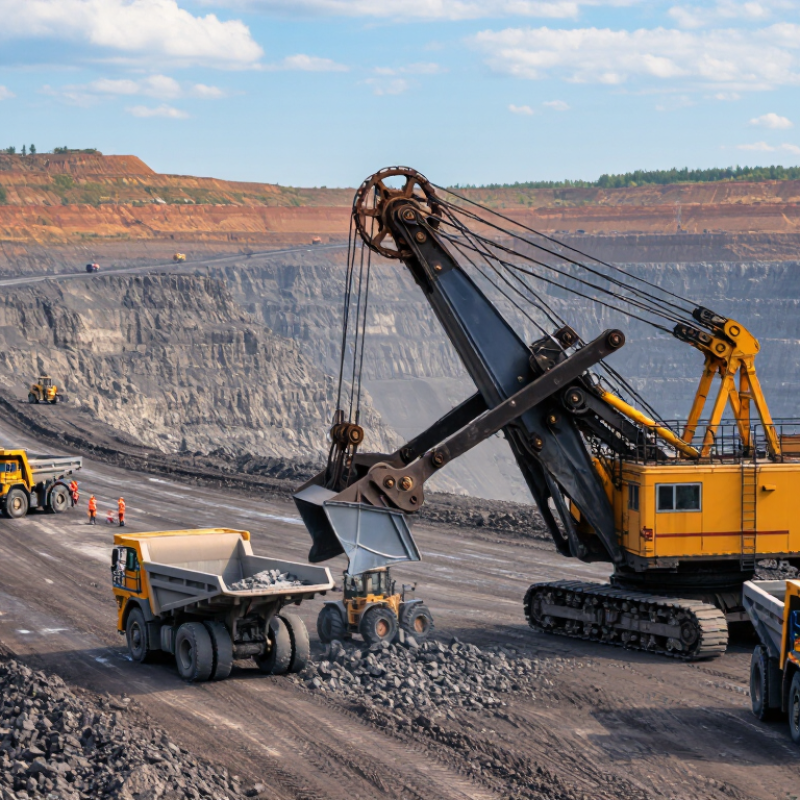
Mining equipment in 2026 is becoming a coordinated system, not a collection of isolated machines. Excavators remove blasted rock, while haul trucks move it to crushers or processing areas. Drills create consistent holes and reduce uneven fragmentation. Loaders support short-distance movement underground and at surface stockpiles. Each machine has a defined role. Small delays still spread quickly.
Sensors track engine temperature, fuel use, payload, vibration, and tire pressure. Connected control rooms compare this data with shift targets. Automated guidance can improve drilling accuracy and reduce unnecessary passes. Battery-electric and hybrid machines may lower local emissions and underground heat. However, charging schedules can interrupt production if planners ignore power limits. That mistake is easy to make. Equipment selection should follow rock hardness, tunnel size, road gradient, and maintenance access. A technically advanced machine can underperform in a poorly matched site.
Field experience shows that simple dashboards often help more than complex displays. Operators need clear alarms, not streams of unexplained numbers. Planned maintenance should use inspection records, oil analysis, and component history. Training matters as much as hardware. A newer fleet may still lose efficiency when crews lack practice. Managers should compare fuel per tonne, cycle time, availability, and unplanned stoppages each shift. These measures reveal hidden waste. Yet no metric explains everything. Weather, geology, and human decisions can distort daily results. Careful review remains necessary, even in a highly automated mine.
Key Factors for Selecting High-Efficiency Mining Equipment
Selecting high-efficiency mining equipment starts with the site, not the catalogue. Haul distance, road gradient, payload, dust, and temperature shape real performance. The International Energy Agency reported in Global Critical Minerals Outlook 2024 that lithium demand grew by about 30% in 2023. Demand growth increases pressure on mines to produce consistently, with fewer delays and lower energy waste. Equipment should match the orebody and operating cycle.
Measure useful output per operating hour. Also measure fuel or electricity per tonne moved. The Global Mining Guidelines Group recommends using common data standards to improve equipment monitoring and interoperability. A practical selection should include onboard diagnostics, accurate payload measurement, remote condition monitoring, and accessible maintenance points. A machine that saves fuel but loses hours during filter changes may not be efficient. Small details matter.
Review total cost across the equipment’s working life. Include energy, tyres, parts, training, downtime, and resale value. PwC’s Mine 2024 report identified productivity, cost control, and energy transition as major mining priorities. Electrification may reduce local emissions, but charging infrastructure and battery performance require careful planning. No spreadsheet captures every muddy shift. That is the uncomfortable part. Pilot testing under real production conditions is still necessary. Select equipment that workers can inspect quickly, repair safely, and operate reliably through changing conditions.
How Automation and Smart Systems Improve Mining Productivity
Modern mining equipment becomes more productive when automation supports skilled operators.
Smart systems can monitor engine temperature, fuel use, vibration, and load weight in real time. This information helps supervisors detect slow cycles and unnecessary idling before they reduce daily output. In an active pit, dispatch software can match haul trucks with loading equipment more accurately. Travel routes become shorter.
Small gains matter.
Automation also improves maintenance decisions.
Vibration sensors may reveal bearing wear before a conveyor stops during a busy shift. Digital dashboards can show equipment health, operating hours, and service priorities in one view.
However, technology is not automatically reliable. Dust can affect sensors, weak network coverage can delay alerts, and poor data can create false warnings. Experienced technicians must verify critical readings and adjust systems to local conditions.
Human judgment still matters.
Tips:
Set practical performance targets before installing smart tools. Train operators with real shift examples, not only classroom demonstrations.
Review idle time, cycle duration, and unplanned stoppages every week. Protect sensor connections from water, dust, and impact.
Test alerts during controlled maintenance periods. Do not automate every decision. Some situations need an experienced person nearby.
Productivity may improve slowly at first, and that is normal. Each review can expose a better setting, or an uncomfortable mistake.
Maintenance, Energy Management, and Workflow Optimization
Mining efficiency in 2026 will depend less on maximum speed and more on controlled reliability. The U.S. Department of Energy’s Operations and Maintenance Best Practices Guide reports that predictive maintenance can save 8–12% over preventive programs. It can save up to 40% compared with reactive maintenance. In practice, a vibration sensor may detect a failing bearing before a haul truck reaches the night shift. Maintenance teams should connect alerts with inspection routes, spare parts, and operator notes. Data alone does not repair equipment.
Energy management needs the same discipline. The International Energy Agency’s Energy Efficiency 2023 report identifies industry as responsible for about 37% of global final energy use. Mines should measure energy by production area, not only by site total. A crusher running empty for twelve minutes is a small event, but repeated stoppages become expensive. Load-based scheduling, leak inspections, and demand monitoring can reduce wasted power. The awkward part is that energy projects often fail when operators cannot see the results.
Workflow optimization should remove waiting, duplicate checks, and unclear handovers. A digital shift board can show equipment status, isolation requirements, material availability, and delayed tasks in one place. Field experience suggests simple visual controls often outperform complicated dashboards. That may sound unfashionable. However, poor data quality remains a serious weakness. Teams should review exceptions weekly, test assumptions, and accept that the first workflow design may be wrong.
Safety, Sustainability, and Future Trends in Mining Equipment
2026 Top Mining Equipment: How to Boost Efficiency?
Safety, sustainability, and future readiness now shape mining equipment decisions. High-efficiency electric loaders can reduce underground exhaust and improve air quality. Battery systems also lower noise near active work zones. However, charging delays remain a practical concern during long shifts. A poorly planned charging station can create more downtime than savings.
Smart drilling rigs use sensors to monitor vibration, pressure, and drill performance. Operators can detect unusual movement before equipment damage becomes serious. Remote monitoring also keeps workers away from unstable areas. Good training still matters. Technology cannot replace judgment in changing ground conditions.
Sustainable equipment should use energy carefully and last longer. Regenerative braking, recyclable components, and modular repairs can reduce waste. Real-time dashboards help maintenance teams schedule service before failures occur. Yet data quality is often overlooked. Dust, weak signals, and inconsistent inspections can produce misleading results. Small mistakes matter. Mining companies should compare actual fuel use, maintenance hours, and incident records before upgrading entire fleets. A cautious trial on one site may reveal problems that sales figures hide.
2026 Top Mining Equipment: Efficiency Priorities
Safety, sustainability, and technology priorities for improving mining equipment performance
The chart presents practical 2026 planning targets expressed as percentage improvement potential versus conventional equipment operation. Electrification, predictive maintenance, automation, operator-assistance systems, and energy monitoring can work together to reduce downtime, improve safety, and lower energy use. Actual results vary by mine design, equipment age, geology, duty cycle, and power source.
FAQS
Excavators remove blasted rock. Haul trucks transport it to crushers or processing areas. Drills create consistent holes for better fragmentation. Loaders move material across short distances.
Start with site conditions, not catalogues. Consider rock hardness, tunnel size, road gradient, haul distance, dust, and temperature. Maintenance access matters too.
Track tonnes moved per operating hour and energy used per tonne. Also review cycle time, availability, idle time, and unplanned stoppages. One metric cannot explain everything.
Sensors monitor temperature, fuel use, payload, vibration, and tire pressure. Control rooms compare readings with shift targets. Clear alarms help more than confusing data streams.
Yes, automation can match haul trucks with loading equipment. It can shorten routes and reduce unnecessary passes. Human judgment remains necessary.
Dust may block sensors. Weak networks can delay alerts. Poor data can create false warnings. Technicians should verify critical readings.
Not always. They may reduce local emissions and underground heat. Charging can interrupt production when power limits are ignored. Planning needs real shift details.
Use inspection records, oil analysis, vibration readings, and component history. Protect sensor connections from water, dust, and impacts. Small checks prevent larger failures.
New equipment can still perform poorly without practice. Train crews with real shift examples and controlled alert tests. Technology does not replace experience.
Yes, pilot testing under real production conditions is wise. Check muddy roads, charging time, filter access, and repair safety. Spreadsheets miss some ugly shifts.
Conclusion
Mining equipment in 2026 is evolving through advanced excavation, hauling, crushing, processing, and material-handling systems supported by sensors, data platforms, and intelligent controls. The central question, “how does equipment selection affect mining efficiency,” can be answered through productivity, reliability, operating cost, energy use, and suitability for specific geological conditions. Choosing equipment with the right capacity, durability, mobility, and digital compatibility helps reduce delays, improve material flow, and support consistent output.
Automation and smart monitoring can optimize equipment operation, identify performance changes, and improve decision-making in real time. Regular maintenance based on condition data minimizes unexpected downtime, while energy management and coordinated workflows reduce waste. Future-focused mining operations will also prioritize operator safety, lower emissions, responsible resource use, and adaptable technologies. By combining practical equipment selection with predictive maintenance, efficient scheduling, and sustainable design, mining companies can build safer, more productive, and more resilient operations.

 Aero Tech