Asphalt paving looks simple from the roadside. A truck feeds hot mix into a paver, and a roller follows. But every pass depends on timing, temperature, material flow, and equipment coordination. So, how does asphalt paving equipment work? It works as a connected system, turning loose, hot asphalt into a smooth, compacted surface.
The Federal Highway Administration’s pavement preservation guidance stresses that pavement performance depends on suitable materials and sound construction practices. The Asphalt Institute’s engineering publications likewise explain why mixture temperature and compaction matter: a mat that cools too quickly may resist proper densification. Small details count. A screed set too high can leave a rough edge; a roller arriving late may struggle to reach target density. Those are not abstract problems. They show up as bumps, open texture, or premature wear.
This guide examines seven key machines, from the asphalt plant and haul truck to the paver, rollers, and milling equipment. NCAT director Randy West’s published research focuses on asphalt materials and pavement performance; a practical takeaway from that work is that construction choices affect how pavements perform. No machine fixes every mistake. Even a well-equipped crew must adapt to weather, mix design, and site conditions. The process is precise, but never perfectly predictable. Understanding each machine’s role helps readers recognize what happens at every stage—and why coordination matters as much as horsepower.
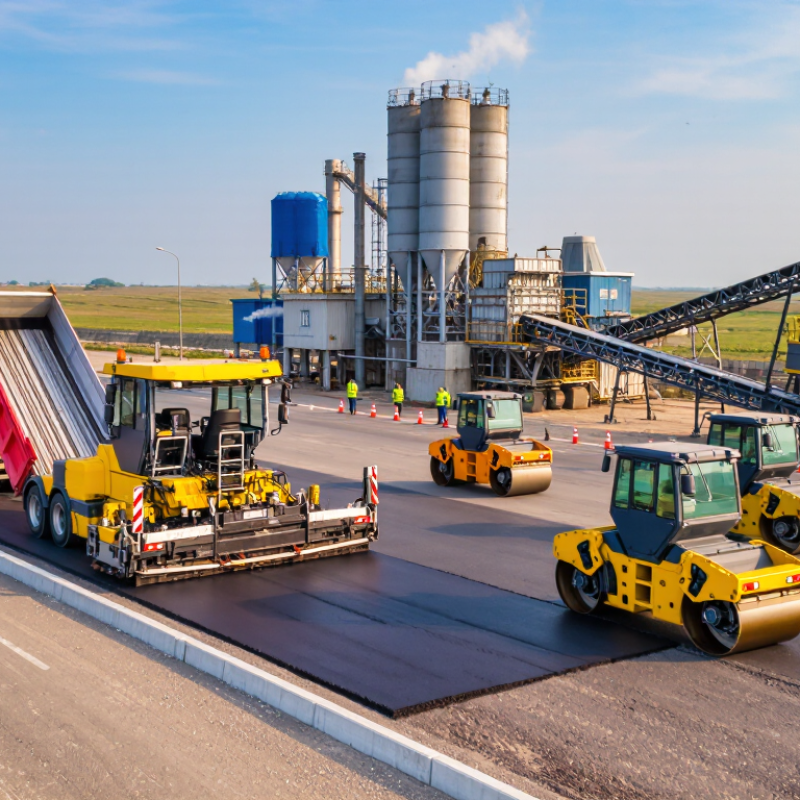
Asphalt paving equipment includes the machines that prepare, place, shape, and compact an asphalt surface. A milling machine may remove worn pavement, while a dump truck delivers hot mix to a paver. The paver spreads the material through a heated screed, which sets its initial width and thickness. Rollers then press the mat while it is still workable, closing air gaps and improving density. Timing matters: asphalt cools quickly, and a delayed roller can leave a rough, weak surface. The exact equipment setup depends on the job, mix, weather, and site access.
The scale is substantial. The National Asphalt Pavement Association’s 2023 industry survey estimated that U.S. plants produced about 400 million tons of asphalt mixtures in 2022. The Asphalt Pavement Alliance reports that asphalt surfaces cover about 94% of paved roads in the United States. These figures help explain why coordinated paving machinery matters: steady truck delivery, consistent paver speed, and timely rolling all affect the finished mat. Still, equipment cannot fix a poor base. That part is easy to underestimate.
Tips: Watch the screed edges for uneven thickness, and check that rollers follow the paver without stopping on fresh asphalt. Keep trucks moving smoothly; sudden gaps can create cold joints. Small details matter. Revisit the mat after cooling, too—surface appearance alone does not prove adequate compaction.
An asphalt paver does more than drop hot mix onto the road. Trucks feed material into the hopper, and conveyor systems carry it toward the rear. Rotating augers spread the mix across the paving width. The screed then levels and shapes it, setting the mat’s initial thickness and surface profile. It is a moving system. A steady truck supply helps prevent stops that can leave visible irregularities.
The screed floats over the mix rather than simply pressing it flat. Its angle, heat, and paving speed influence the mat’s texture and thickness. Operators watch the edges, auger flow, and screed response while checking the surface behind the machine. A cold streak or uneven pile can signal inconsistent material flow. Small adjustments matter. Still, the paver cannot fix every problem; mix temperature and consistent truck delivery also affect the finished mat.
Material reuse is part of today’s paving context. The National Asphalt Pavement Association’s 2022 industry survey reported that about 89 million tons of reclaimed asphalt pavement were used in new asphalt mixes in the United States. That figure highlights why steady, controlled feeding matters: reclaimed material must be blended into a workable mix before it reaches the paver. The machine spreads and shapes what arrives; it does not correct a poorly prepared mix. A useful reminder.
A road roller compacts freshly laid asphalt by pressing its heavy drum against the surface. That pressure reduces air gaps between aggregate particles and helps the pavement form a dense, stable layer. The process looks simple. It isn’t.
Operators usually begin while the asphalt is hot enough to compact, following the paving crew at a controlled distance. Too much delay can leave the mix too cool to respond well; excessive rolling may cause surface marks or push material out of place. Roller speed, drum vibration, and the number of passes all matter. On a typical job, crews check temperature and watch the mat closely, since conditions can change across a short stretch of road. Near edges and around utility covers, careful positioning helps prevent weak spots. Small details count.
Vibratory rollers use rapid drum movement to help compact suitable asphalt layers, while static rolling applies pressure without vibration. The right method depends on the mix, layer thickness, and site conditions, so there is no reliable one-setting rule. A smooth appearance alone does not prove adequate compaction; crews may use density tests to check the result. Even experienced operators can misjudge a changing surface, and that deserves attention, not excuses. Dust, glare, or uneven lighting can make shallow marks harder to notice, so a slower inspection pass can be worthwhile.
How compaction creates a strong, smooth surface: A roller compacts hot asphalt by reducing air voids. Density as a percentage of theoretical maximum density equals 100% minus air-void content, so the values shown are a direct calculation. Many dense-graded asphalt specifications target about 4–8% air voids, but acceptance limits vary by mix and project.
Among the seven key asphalt paving machines, a milling machine prepares damaged pavement for a cleaner rebuild. Its rotating drum carries carbide-tipped teeth that scrape asphalt from the road surface. The operator controls cutting depth, often removing only the cracked or deformed layer.
Depth matters.
As the drum turns, loosened asphalt moves onto a conveyor and drops into a waiting haul truck. Water sprays can reduce heat and airborne dust during cutting. The machine also creates a consistent profile, helping new asphalt bond with the milled surface. Around manholes, curbs, and utility covers, operators must slow down and adjust carefully. Small errors can damage edges or leave uneven transitions.
Before milling begins, crews inspect drainage, pavement thickness, and visible surface failures. Milling removes old material, but it cannot fix a weak subgrade or serious water problems below the road.
That limitation is easy to overlook.
I would also question any plan based only on appearance; a smooth-looking surface may hide deeper movement. After removal, workers check the exposed base, clear loose debris, and measure the finished depth before repaving.
A practical detail often missed: the milled surface should remain clean and properly shaped, not simply rough.
Seven machines shape an asphalt job from surface preparation to final compaction. A milling machine cuts worn pavement to a controlled depth, leaving a textured surface for the new layer. A plant heats and blends aggregate with binder; its mix must stay consistent, not merely hot. Haul trucks carry the material in insulated beds. Delays matter. The National Asphalt Pavement Association’s 2023 industry survey reported that the United States reused about 94.6 million tons of reclaimed asphalt pavement in 2022. That figure underscores why milling and careful material handling matter: reclaimed material needs proper processing and a controlled mix.
At the work zone, a paver spreads asphalt through its hopper and screed, setting initial width, depth, and surface profile. A material transfer vehicle can receive mix from trucks and feed the paver steadily, reducing interruptions and helping limit temperature variation. It is useful on larger projects, though not every small site needs one. An asphalt distributor applies a measured tack coat so new material bonds to the layer below. A broom or sweeper clears dust and loose debris first. Small details count.
Compaction depends on rollers. A steel-drum roller seats the mat, while a pneumatic-tire roller kneads it and helps close surface voids; a finish roller smooths marks. Operators choose passes and timing based on mix temperature, lift thickness, and weather. There is no magic number of passes. Even experienced crews can misjudge cooling on a windy day, so temperature checks and density testing remain essential.
It prepares, places, shapes, and compacts asphalt. A milling machine removes old pavement, trucks deliver the mix, a paver spreads it, and rollers compact it.
The paver receives hot mix from a truck and distributes it across the road. Its heated screed sets the initial width and thickness.
Asphalt cools quickly. If rollers arrive late, the mix may resist compaction and leave a rough, weaker surface.
Its heavy drum presses the asphalt, reducing air gaps between aggregate particles. Crews adjust speed, vibration, and passes to suit the mix and site.
No. Vibratory rollers use rapid drum movement, while static rollers apply pressure without vibration. The right choice depends on layer thickness and conditions.
They can use density tests. A smooth appearance alone does not confirm adequate compaction.
Teeth on a rotating drum scrape asphalt to a controlled depth. A conveyor carries the removed material into a haul truck.
No. It removes pavement but cannot repair a weak subgrade or serious drainage issues. Crews should inspect the exposed base before repaving.
Uneven screed edges, truck gaps, and delayed rolling can cause trouble. Edges, utility covers, and milled transitions also need careful attention.
Surface appearance can hide poor compaction or shallow marks. Lighting and glare can fool an inspection, so a slower check may catch missed details.
Asphalt paving equipment works together to transform prepared ground into a durable, even road surface. To understand how does asphalt paving equipment work, start with the asphalt paver: it receives hot-mix asphalt, distributes it across the roadway, and uses a screed to shape the layer at a consistent width and depth. Road rollers then compact the material, reducing air gaps and helping create a smooth, stable surface. Milling machines perform a different but essential task by removing worn asphalt to prepare a road for resurfacing.
Seven essential types of asphalt paving machines support different stages of the job, from preparing and transporting material to spreading, shaping, compacting, and finishing pavement. Each machine has a specific role, and choosing the right equipment depends on the project’s size, surface condition, and required finish. When these machines are coordinated effectively, paving crews can build more uniform surfaces and help extend the life of roads.

Aero Tech