China Top 10 Material Handling Safety Risks?

Time:2026-10-15 Author:Isabella
0%

China’s warehouses, factories, and distribution centers move thousands of loads daily. Each pallet, forklift, rack, and conveyor can create a different exposure. This introduction asks: what are safety risks in material handling operations, and how can teams control them before injuries occur?

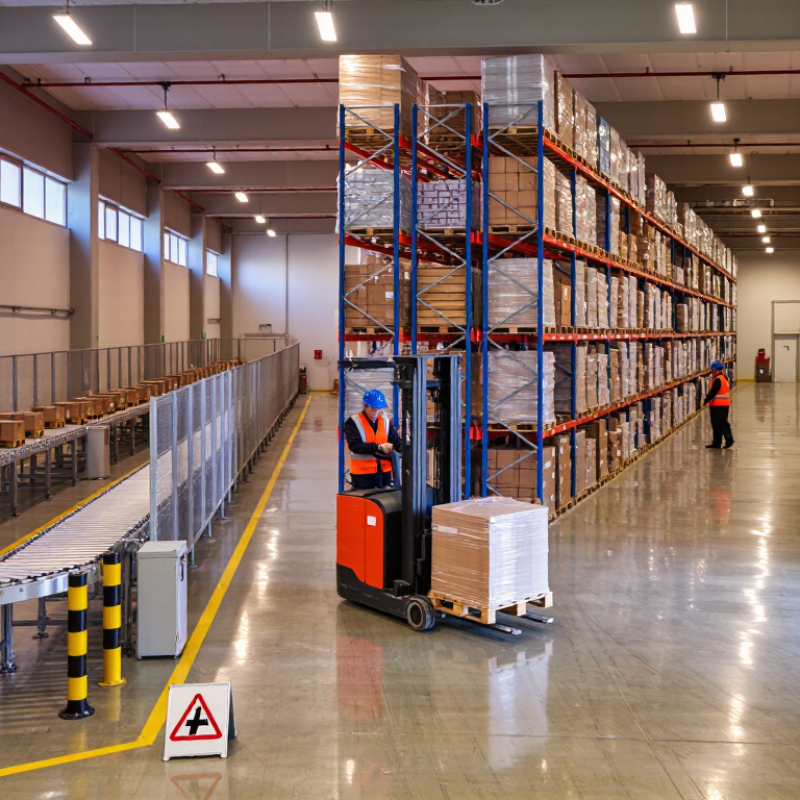
The China Top 10 Material Handling Safety Risks guide examines forklift collisions, falling loads, unstable storage racks, conveyor entanglement, manual lifting strains, blocked aisles, loading-dock falls, battery hazards, poor visibility, and weak emergency planning. These risks are not abstract. A loose carton can slide from a high rack. A wet dock can turn one hurried step into a serious fall. A reversing forklift may meet a pedestrian at a blind corner.

Dr. David Michaels, former Assistant Secretary of Labor for Occupational Safety and Health, stated, “All workers have the right to a safe and healthful workplace.” That principle gives this topic practical authority. Effective prevention combines worker experience, equipment inspections, traffic separation, load assessments, clear procedures, and repeated training. OSHA guidance and ISO 45001 principles also support hazard identification and continual improvement.

Still, no checklist catches everything. A trained operator can rush. A clean aisle can become crowded within minutes. That weakness deserves attention, not denial. Supervisors should observe real work, listen to operators, and correct small failures early. The following sections connect common Chinese material-handling conditions with practical controls, measurable responsibilities, and safer daily decisions. Safety improves through consistent action, honest reporting, and the willingness to rethink familiar routines.
China Top 10 Material Handling Safety Risks?

Material Handling Safety in China: Scope, Standards, and Risk Categories

China Top 10 Material Handling Safety Risks?

Material handling in China covers factories, warehouses, ports, construction sites, and distribution centers. The main risks include struck-by incidents, forklift collisions, falling loads, unstable stacking, caught-in machinery, manual lifting, poor traffic separation, damaged racks, unsafe lifting accessories, and weak emergency controls. These categories connect equipment, workers, layout, and management.

Chinese sites commonly reference GB/T 6067.1 for crane safety, GB 5083 for production equipment, and TSG 81-2022 for special-purpose motor vehicles. Requirements also depend on equipment type, workplace conditions, and local supervision. The International Labour Organization estimated 2.93 million work-related deaths and 395 million non-fatal injuries worldwide in 2019, as reported in its 2023 global estimates. Material handling is only one part, but its daily exposure is difficult to ignore.

Visibility matters.

A safe warehouse needs marked pedestrian routes, controlled speeds, inspected pallets, rack-load labels, and trained operators. Supervisors should examine near misses, not only injuries. A checklist can miss a blind corner or a poorly positioned mirror. Paper compliance is not enough. Risk assessments should include shift changes, temporary storage, contractor activity, and seasonal workload peaks. Some controls remain imperfect, and that weakness deserves regular review.

Risk 1–3: Forklifts, Vehicle Traffic, and Unstable Loads

China Top 10 Material Handling Safety Risks?
Risk 1–3: Forklifts, Vehicle Traffic, and Unstable Loads

Forklifts remain a serious warehouse hazard in China, especially near loading bays and narrow aisles. A trained operator should complete a pre-shift inspection before moving any pallet. Check the brakes, horn, steering, tires, forks, and warning lights. Supervisors should verify operator authorization and maintain clear pedestrian routes. Never carry passengers. Never lift people on improvised platforms.

Slow down at blind corners.

Vehicle traffic creates hidden conflict points. Separate forklifts, trucks, bicycles, and pedestrians with barriers, floor markings, or controlled crossings. Mirrors can improve visibility, but they cannot replace attention. Delivery areas need clear signals, adequate lighting, and a traffic plan suited to actual work patterns. Supervisors should review near misses, not only recorded injuries. A rushed driver may ignore a familiar crossing, even when signs are visible.

Unstable loads can collapse without warning. Inspect pallets for broken boards, loose wrapping, and uneven weight. Keep heavy items low and center the load before lifting. Do not exceed the equipment’s rated capacity. Operators should travel with the load close to the floor and tilted correctly. I have seen teams trust plastic wrap too much; it holds until vibration exposes a weak stack. That assumption needs challenging. Supervisors should align procedures with applicable Chinese standards, equipment instructions, and site-specific risks. Regular toolbox talks help, but a practical floor observation often reveals more than a completed checklist.

Risk 4–6: Lifting Equipment, Falling Objects, and Manual Handling

Lifting equipment can turn a routine warehouse task into a serious event. Overloaded cranes, damaged slings, and unclear load charts create hidden danger. OSHA’s 2023 construction data recorded 75 fatal struck-by incidents, showing how severe equipment failures can become. In Chinese facilities, supervisors should verify rated capacity, inspection tags, hooks, brakes, and operator competence before each shift. A practical check takes minutes. It can prevent months of disruption.

Falling objects often begin with poor stacking, loose packaging, or a pallet placed above shoulder height. OSHA identifies struck-by hazards among the construction industry’s leading fatal risks. Use toe boards, rack protection, securing straps, and clearly marked exclusion zones. Never walk beneath a suspended load. Workers may still enter the area when production pressure rises. That behavior needs active correction, not silent acceptance.

Manual handling remains less dramatic but highly repetitive. The UK Health and Safety Executive reported 543,000 workers with work-related musculoskeletal disorders in 2023/24, causing 7.1 million lost working days. Use carts, lift tables, adjustable workstations, and team lifts for awkward loads. Train workers to assess distance, grip, posture, and frequency before lifting. “Lift with your legs” is incomplete advice. Load weight and route design matter more. A rushed assessment can still miss a wet floor or blocked turning space.

Risk 7–8: Storage Systems, Conveyors, and Hazardous Energy

In Chinese warehouses, storage systems can fail quietly before anyone notices. Bent uprights, missing pins, and overloaded beams create unstable pallet positions. A dropped carton may injure workers below. During site inspections, I look for impact marks near rack bases and pallets leaning into aisles. Floor conditions matter too. Oil, water, and uneven concrete reduce stability. Risk increases when operators rush replenishment during peak shifts.

Conveyors add moving nip points, unexpected starts, and trapped clothing hazards. Guards should remain fitted, and emergency stops must be reachable from normal work areas. A useful test is simple: stop the line, isolate energy, and verify zero movement before clearing a jam. Electrical power is not the only source. Pneumatic pressure, gravity, stored tension, and elevated loads can remain dangerous. Clear isolation labels help, but labels alone are not control. Workers need task-specific training and supervised practice. I have seen procedures that looked complete yet failed during a real blockage. That gap deserves honest review.

Tips: Inspect racks after impacts and record defects with photographs. Keep load limits visible at eye level. Mark pedestrian routes beside conveyors. Before maintenance, identify every energy source, isolate it, release stored energy, and test the equipment. Use a second-person check for unusual tasks. Review near misses weekly; small warnings often arrive before a serious failure. Do not treat a clean inspection sheet as proof of safety.

China Top 10 Material Handling Safety Risks: Risks 7–8

Storage Systems, Conveyors, and Hazardous Energy

The chart compares selected U.S. OSHA FY2023 citation totals that are closely related to material-handling hazards. Lockout/tagout reflects hazardous-energy exposure, machine guarding relates to conveyor and moving-equipment access, and powered industrial truck citations are strongly associated with storage aisles and warehouse traffic. Citation counts indicate enforcement attention, not the probability of an incident.

Source: U.S. OSHA FY2023 Top 10 Most Frequently Cited Standards.

Risk 9–10: Workplace Conditions, Training, and Emergency Preparedness

China Top 10 Material Handling Safety Risks?

Risk 9: Workplace conditions can turn routine handling into a serious hazard.

In Chinese warehouses, wet floors, blocked aisles, poor lighting, and uneven loading areas deserve daily attention. A pallet may look stable while leaning against a damaged rack. That small detail matters. Supervisors should inspect travel paths, rack protection, floor markings, and ventilation during each shift. Photos and written records make repeated defects easier to track. Still, inspections can become mechanical. Workers may tick every box without really looking.

Risk 10: Training and emergency preparedness must match actual work, not just written procedures.

New operators need supervised practice with loads, turning areas, pedestrian crossings, and parking positions. Refresher sessions should follow near misses, equipment changes, or repeated unsafe habits. Keep training practical. Ask workers to explain what they would do if a load falls, a person is injured, or visibility disappears. Emergency drills should identify alarms, evacuation routes, first-aid points, and communication roles. Use realistic timing.

Preparedness is often weakest during night shifts. A contact list may be outdated, and an emergency route may be blocked by temporary stock. Managers should test these details with workers, not assume they work. I have seen teams perform well during drills but hesitate during real incidents. That gap deserves honest review. Supervisors should record response times and correct one weakness at a time.

FAQS

What are the main material handling risks in Chinese workplaces?

Common risks include forklift collisions, falling loads, unstable stacking, damaged racks, and poor pedestrian separation. A blind corner matters.

How can warehouses reduce vehicle and pedestrian collisions?

Mark separate walking routes and vehicle lanes. Use mirrors, speed controls, warning signs, and clear crossing points. Check visibility during shift changes.

What should supervisors inspect before lifting equipment is used?

Confirm rated capacity, inspection tags, hooks, brakes, slings, and operator competence. Never rely only on paperwork. A quick check takes minutes.

How can falling objects be prevented?

Secure loose packaging and inspect pallets before stacking. Use rack protection, toe boards, straps, and exclusion zones. Nobody should stand beneath a suspended load.

What makes manual handling safer?

Assess the load weight, grip, route, distance, and lifting frequency. Use carts, lift tables, adjustable stations, or team lifting for awkward loads. “Lift with your legs” is incomplete advice.

Which workplace conditions require daily attention?

Inspect wet floors, blocked aisles, poor lighting, uneven loading areas, and damaged racks. A leaning pallet can become a falling load. Small defects grow.

What should practical safety training include?

Training should cover loaded turns, pedestrian crossings, parking, temporary storage, and changing visibility. Workers should explain their actions during realistic incidents. Written procedures are not enough.

How can emergency preparedness be tested effectively?

Check alarms, evacuation routes, first-aid points, contact lists, and communication roles. Test night-shift conditions and temporary stock obstructions. Drills can still hide hesitation.

Why should companies review near misses?

Near misses reveal weak controls before someone is injured. Review blind corners, rushed lifting, unsafe stacking, and repeated shortcuts. A checklist may miss the real problem.

Conclusion

Material handling safety in China covers the movement, lifting, storage, and control of materials across factories, warehouses, and distribution facilities. The key question is: what are safety risks in material handling operations? Common risks include forklift collisions, unsafe vehicle traffic, unstable or overloaded loads, lifting equipment failure, falling objects, and injuries caused by repetitive or improper manual handling.

Additional hazards may arise from poorly designed storage systems, blocked aisles, conveyor pinch points, and unexpected release of hazardous energy during maintenance. Wet floors, inadequate lighting, excessive noise, limited workspace, and insufficient ventilation can further increase the likelihood of accidents. Effective prevention depends on suitable equipment, organized storage, clear traffic routes, routine inspections, proper training, and consistent operating procedures. Emergency preparedness is equally important, requiring accessible communication, first-aid resources, evacuation arrangements, and regular drills. A practical safety program should identify risks according to the workplace environment, reinforce accountability, and continually improve controls through observation and review.

Isabella

Isabella

Isabella is a dedicated marketing professional with a sharp focus on driving brand growth and engagement through strategic content creation. With an extensive background in digital marketing, she combines her passion for storytelling with her keen understanding of industry trends to deliver......