How to Improve Road Compaction for Highway Construction?

Time:2026-10-22 Author:Ethan
0%

Highway performance begins beneath the visible surface. Proper compaction creates a dense, stable foundation that supports traffic, limits deformation, and reduces moisture damage. But why is road compaction important in highway construction? Without adequate density, pavement layers may rut, crack, or settle unevenly before reaching their intended service life.

Improving compaction requires more than adding roller passes. Engineers must match the roller type, operating speed, vibration setting, and rolling pattern to the soil and aggregate. Moisture content also matters. Material that is too dry may resist densification, while excessive water can weaken the layer. On a typical site, technicians may check density with approved field tests, record temperatures, and compare results with project specifications. These records help crews adjust quickly instead of relying only on appearance.

Small details matter.

Experienced supervisors watch for loose edges, uneven wheel marks, and material pushed ahead of the drum. They also consider weather, layer thickness, haul delays, and equipment access. A smooth surface does not always indicate proper internal density. That assumption can create expensive problems later. In practice, even skilled crews may need to revise their rolling pattern after testing reveals inconsistent results. This is not failure; it is useful feedback.

This guide examines practical ways to improve road compaction for highway construction. It focuses on preparation, moisture control, equipment selection, testing, and quality assurance. Recommendations should always be verified against the project design, local specifications, and manufacturer guidance. Reliable compaction is built through measured decisions, consistent observation, and a willingness to correct weak methods before the pavement is opened to traffic.
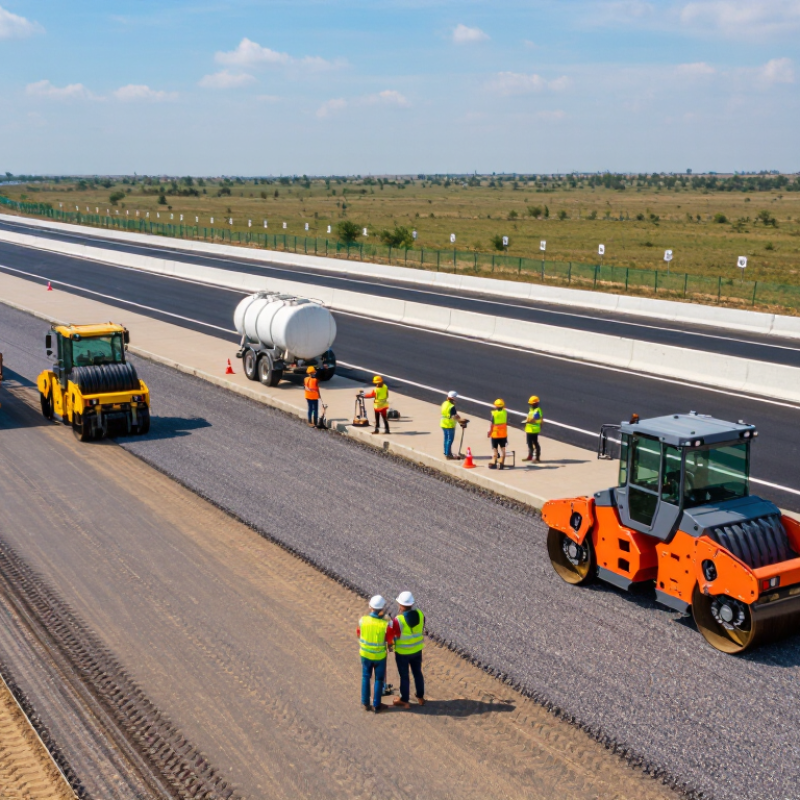
How to Improve Road Compaction for Highway Construction?

Understanding the Role of Road Compaction in Highway Construction

Road compaction is a structural process, not merely a finishing task. It reduces air voids and increases the soil’s resistance to traffic loads, moisture, and seasonal movement. Poorly compacted layers may rut under heavy trucks or crack after repeated temperature changes. On a highway project, each layer must support the next one. That makes density control important from the subgrade upward.

Field experience shows that moisture often determines the result. Material that is too dry may resist the roller, while overly wet soil can pump beneath the equipment. Crews should compare field density with the project specification and record moisture readings during placement. Roller speed, vibration, and overlap also need adjustment as conditions change. A fixed routine is convenient, but it can produce uneven results. I have seen a visually smooth surface fail because deeper areas remained loose.

Tips: Use trial sections before full production. Check density at different chainages, not only near the access point. Keep lifts uniform and remove soft spots before compaction. Watch for surface movement during rolling; it may indicate excess moisture or weak support. Allow qualified technicians to interpret test results, because one number cannot describe the entire layer. Rechecking after rain is wise, even when the surface looks acceptable.

How to Improve Road Compaction for Highway Construction?

Common minimum relative compaction targets by highway pavement layer

Proper compaction reduces air voids, increases load-bearing capacity, and limits settlement and moisture damage. Typical project specifications often require approximately 95% relative compaction for compacted subgrade, 98% for granular subbase, and 100% for granular base. Actual requirements vary by material, test method, climate, and local highway standards.

Selecting Suitable Compaction Equipment for Different Soil Conditions

Selecting Suitable Compaction Equipment for Different Soil Conditions

Improving road compaction begins with reading the soil, not choosing the largest machine. Granular soils, such as sand and crushed gravel, respond well to vibratory smooth-drum rollers. Vibration rearranges loose particles and reduces air voids efficiently. Use moderate amplitude first, then adjust frequency according to site feedback.

Cohesive soils need a different approach. Clay and silty clay usually compact better with a padfoot roller, which kneads the material through concentrated pressure. Moisture matters. Soil that feels dusty may need controlled watering, while sticky soil may require drying before rolling. Thin lifts, often 150 to 250 millimeters, improve results. Thick layers can look firm while remaining weak underneath.

Mixed soils can be difficult. A pneumatic roller may provide useful kneading and sealing, especially after grading. Narrow shoulders and areas near drainage structures may require a smaller vibratory plate or walk-behind roller. Heavy equipment can damage edges or disturb buried utilities.

Field density testing should guide the rolling pattern. Mark the number of passes, travel speed, and moisture condition. Watch the edges. They often receive less compaction than the center. I have seen crews add more passes when the real problem was excessive moisture. That wastes time and may weaken the layer. Equipment selection is never completely automatic. Soil behavior changes across short distances, so operators must inspect the surface after every adjustment. Fresh test data should outweigh habit.

How to Improve Road Compaction for Highway Construction? - Selecting Suitable Compaction Equipment for Different Soil Conditions

Soil Condition Typical Soil Description Recommended Equipment Typical Lift Thickness Recommended Operating Speed Typical Passes Moisture Control Guidance Typical Compaction Requirement Key Quality-Control Checks
Well-graded granular soil Gravel and sand with a broad particle-size distribution and limited plastic fines Smooth-drum vibratory roller; use a pneumatic roller for final sealing where appropriate 200–300 mm 3–5 km/h during vibration 4–8 total passes Maintain moisture close to the laboratory optimum; avoid excess water that may cause pumping Commonly 95% or more of maximum dry density, subject to project specifications In-place density, moisture content, layer thickness, and visible movement under the roller
Clean sand Uniform or poorly graded sand with little or no cohesion Vibratory smooth-drum roller; controlled water application may improve particle rearrangement 150–250 mm 3–4 km/h during vibration 5–10 total passes Use light, uniform wetting; excessive water can reduce stability and create localized soft spots Often 95% or more of maximum dry density, depending on the specified test method Density uniformity, surface ravelling, moisture distribution, and proof-rolling response
Clayey soil Fine-grained, cohesive soil with moderate to high plasticity Padfoot or sheepsfoot roller, followed by a smooth-drum roller for surface finishing 150–200 mm 2–3 km/h 6–12 total passes Work near optimum moisture; aerate or add water gradually to correct deviations Commonly 90–95% of maximum dry density, or as required by the project specification Moisture-density relationship, plasticity, density, pumping, and kneading action through the full lift
Silty soil Low-plasticity fine soil that can lose strength when saturated Smooth-drum vibratory roller at moderate amplitude; pneumatic roller may be used for finishing 150–200 mm 2–4 km/h 5–10 total passes Keep close to optimum moisture and stop work if the surface becomes unstable or pumps under traffic Often 95% of maximum dry density, subject to the specified method and material behavior Moisture sensitivity, density, proof rolling, rutting, and surface cracking
Mixed soil with gravel and fines Variable soil containing gravel, sand, silt, and clay fractions Vibratory padfoot roller, followed by a smooth-drum or pneumatic roller for finishing 150–250 mm 2–4 km/h 6–12 total passes Adjust water according to the fine fraction; prevent segregation and excessive surface sealing Typically 95% or more where specified for structural fill or subgrade Gradation, lift thickness, moisture, density, segregation, and nonuniform areas
Granular subbase Crushed aggregate or natural granular material used below the base course Heavy vibratory smooth-drum roller; pneumatic roller for final kneading when required 150–200 mm 3–5 km/h 4–8 total passes Use uniform moisture where permitted; avoid saturation and aggregate displacement Commonly 98% of maximum dry density for heavily trafficked pavement layers Gradation, density, level, crossfall, thickness, and proof-rolling performance
Rockfill or coarse aggregate Large, angular particles with limited fine material and high void content Heavy vibratory roller; use multiple orientations or supplemental methods where particle interlock is difficult 300–600 mm, depending on maximum particle size and specification 2–4 km/h during vibration 6–12 total passes Water is generally used for dust control or particle seating, not as a substitute for proper grading Use project-specific acceptance criteria; density tests may be unsuitable for very coarse material Settlement, surface movement, layer thickness, particle breakage, and proof rolling
Stabilized soil Soil treated with cement, lime, or another approved stabilizing agent Padfoot or smooth-drum vibratory roller selected according to the mix; finish with a pneumatic or smooth roller 150–200 mm 2–4 km/h 4–8 total passes within the specified working time Control moisture precisely and complete mixing, shaping, and compaction before the material begins to set Usually based on the approved mix design, density, strength, and uniformity requirements Binder content, moisture, mixing uniformity, density, smoothness, and curing conditions

Note: The ranges shown are general planning values. Final equipment settings, lift thickness, number of passes, moisture limits, and acceptance criteria should be confirmed through a project-specific field compaction trial and the applicable roadwork specifications.

Preparing the Construction Site and Materials for Effective Compaction

Effective highway compaction begins before any roller enters the site. Survey crews should confirm grades, drainage paths, and weak ground zones after clearing. Standing water is a warning. Remove organic soil and soft pockets, then replace them with approved, well-graded fill. The material should arrive near its target moisture content. Too dry, it will resist bonding. Too wet, it may pump beneath construction traffic. Moisture checks with a calibrated gauge or laboratory test provide dependable guidance. However, field readings can vary across a long alignment. That variation deserves attention.

Spread each layer evenly, rather than dumping thick piles and correcting them later. Layer thickness must match the soil type and compaction equipment. A practical trial section can establish roller passes, travel speed, and vibration settings. Operators should watch the surface, not only the machine display. Visible waves, rutting, or loose edges often reveal poor moisture control. I have seen crews add passes when the real problem was unsuitable fill. More rolling did not fix it. Density testing should confirm the required result at representative locations. Testing only the easiest areas creates false confidence. Weather also changes the plan. After rain, scarify and aerate wet material before continuing, when specifications permit. After drying winds, restore moisture gradually and mix it through the layer. Small preparation errors become expensive beneath pavement.

Applying Step-by-Step Compaction Methods and Quality Controls

Road compaction improves when crews follow a controlled sequence, not when they simply add more roller passes. Start with a test strip. Confirm the material temperature, lift thickness, moisture, and roller pattern before production begins. For asphalt, compact while the mix remains workable, then reduce speed and vibration near joints and drainage structures. Start cool. Avoid sudden stops.

AASHTO mix-design practice commonly uses 4% air voids at design conditions, while field acceptance often targets about 92–96% of theoretical maximum specific gravity. Crews should verify density with calibrated gauges or core samples, following the project specification. Check the first, middle, and final sections of each paving run. Record temperature and density beside the station number. This simple detail exposes weak zones quickly.

The Federal Highway Administration’s Intelligent Compaction guidance reports that roller-mounted systems provide continuous coverage and stiffness mapping, unlike isolated spot tests. Use those maps to identify soft areas, then confirm them with independent testing. Watch the edges. They often cool first and receive fewer effective passes. A failed test is useful evidence, not merely a delay. However, stiffness readings can mislead when moisture, aggregate shape, or buried utilities affect the result. Field judgment still matters. Not perfect. Crews should review the data after each shift and adjust pass counts, travel speed, or rolling temperature before the next lane.

Monitoring Density, Moisture, and Surface Performance During Construction

Highway compaction depends on more than roller weight or repeated passes. Field teams should monitor density, moisture, and surface performance together. Each measurement explains a different part of the pavement’s behavior.

Density checks should follow the approved test plan and cover the full work area. Record results near joints, edges, and wheel paths, where compaction often becomes uneven. Compare readings with the target range, not just the average. A high average can hide weak sections. Small changes matter.

Moisture control begins before rolling. Material that is too dry may resist proper particle rearrangement. Excess moisture can create pumping, movement, or delayed strength. Crews can compare test readings with visible signs, such as a shiny surface or material sticking to the roller drum. Our early checks were not perfect. Some readings changed after traffic crossed the area, which showed that timing also affects reliability.

Surface performance needs practical observation. Use proof rolling to identify soft spots, and check the finished layer with a straightedge or level survey. Watch for cracking, shoving, loose edges, and shallow depressions after cooling or light rain. That pattern matters. Photos, test locations, roller passes, weather, and corrective actions should stay in one daily record. This evidence helps engineers trace problems instead of guessing. Still, instruments can mislead when calibration, temperature, or sampling depth is overlooked. Experienced supervisors should question unusual results and retest before approving the next layer.

FAQS

How should soil type influence compaction equipment selection?

Granular soil, such as sand or crushed gravel, usually suits a vibratory smooth-drum roller. Vibration rearranges loose particles and reduces air gaps. Start with moderate amplitude. Adjust frequency after checking the surface.

Which equipment works best for clay or silty clay?

A padfoot roller usually performs better because it kneads cohesive soil. Moisture remains critical. Dusty soil may need controlled watering, while sticky soil may need drying.

Why are thin lifts important during road compaction?

Thin lifts, often 150 to 250 millimeters, help pressure reach the full layer. Thick lifts may look firm on top but remain weak below. Surface appearance can mislead.

What should crews do with mixed soils?

Mixed soils may benefit from a pneumatic roller after grading. Its tires provide kneading and sealing. Results can vary across short distances. Inspect each section.

How should narrow shoulders and drainage areas be compacted?

Use a smaller vibratory plate or walk-behind roller near edges and structures. Large machines can damage shoulders or disturb buried utilities. Slow work is safer there.

How can field density testing improve the rolling pattern?

Record passes, travel speed, moisture, and test locations. Check the beginning, middle, and end of each paving run. Fresh measurements should guide adjustments, not habit.

What moisture problems can cause wasted roller passes?

Excessive moisture may weaken the layer, even after repeated rolling. Crews sometimes add passes when drying is needed. That mistake wastes time. Check moisture before changing equipment.

How should asphalt be compacted near joints and drainage structures?

Compact asphalt while the mix remains workable. Reduce speed and vibration near joints and drainage structures. Avoid sudden stops. Edges often cool sooner and receive fewer effective passes.

Can continuous roller data replace density testing?

No. Roller systems can show coverage and stiffness patterns, but readings may mislead. Moisture, aggregate shape, or buried utilities can affect results. Confirm soft areas independently.

What should crews do after a failed compaction test?

Treat the failure as useful evidence, not only a delay. Review temperature, moisture, lift thickness, and pass count. The correction may be smaller, not heavier, equipment. Perfect patterns are rare.

Conclusion

Effective road compaction is essential to building a safe, durable, and stable highway. The question “why is road compaction important in highway construction” can be answered by its role in reducing air voids, improving soil strength, limiting settlement, and creating a firm foundation that can withstand traffic and weather conditions. Proper compaction also helps prevent cracking, rutting, water damage, and uneven pavement performance over time.

Successful results begin with evaluating the soil type, moisture content, and project requirements before selecting suitable compaction equipment. The construction site should be properly graded, cleared, and prepared, while fill materials must be placed in controlled layers. Compaction should then be completed through systematic passes, with pressure, vibration, and speed adjusted to the material. Quality control requires regular testing of density and moisture, along with inspections of surface smoothness, stability, and uniformity. Continuous monitoring allows construction teams to correct weak areas early and achieve consistent highway performance.

Ethan

Ethan

Ethan is a seasoned marketing professional with a deep expertise in our company's innovative product line. With a passion for sharing knowledge and insights, he takes the lead in regularly updating our corporate blog, where he explores industry trends, product features, and effective marketing......